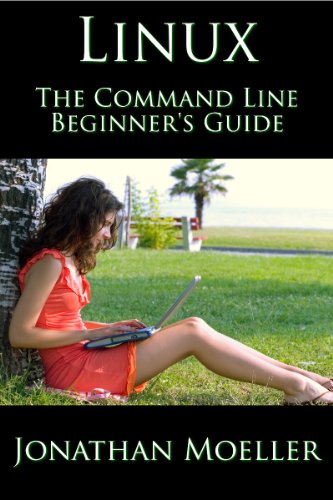
Better than a summary
The Linux Command Line Beginner's Guide summary
Jonathan Moeller
No credit card required · Cancel anytime
The Linux Command Line Beginner's Guide by Jonathan Moeller is a comprehensive introduction to the Linux command line. It covers basic to advanced commands, file navigation, text editing, and more, making it a valuable resource for beginners.
Topics
Table of Contents
- The Linux Command Line Beginner's Guide: summary of key ideas
- What is The Linux Command Line Beginner's Guide about?
- The Linux Command Line Beginner's Guide Review
- Who should read The Linux Command Line Beginner's Guide?
- About the author
- Book summaries like The Linux Command Line Beginner's Guide
- People also liked these summaries
- The Linux Command Line Beginner's Guide FAQs
The Linux Command Line Beginner's Guide
Summary of key ideas
Linux Command Line Basics
In The Linux Command Line Beginner's Guide by Jonathan Moeller, we are introduced to the basics of the Linux command line. The book begins with a brief history of Linux and its command line interface, followed by a detailed explanation of the terminal environment and how to navigate the file system using commands such as ls, cd, and pwd.
Moeller then delves into file and directory management, teaching us how to create, copy, move, and delete files and directories. He also explains how to manipulate file permissions and ownership using commands like chmod and chown.
Text Editing and Processes
The second part of the book focuses on text editing, where Moeller introduces vi and nano, two popular text editors used in the Linux command line. He explains the basic commands for editing text files and creating new ones, essential skills for any Linux user.
Moeller then moves on to processes, detailing how to view and manage running processes using commands like ps, top, and kill. He also discusses how to schedule tasks using crontab and at, two utilities for automating processes in Linux.
Users, Groups, and Permissions
The third section of the book covers user and group management. Moeller explains how to create and delete user accounts, assign users to groups, and manage group memberships. He also discusses user privileges and how to use the sudo command to execute administrative tasks.
Furthermore, Moeller provides an in-depth explanation of Linux file permissions, including how to read, set, and modify file permissions using symbolic and octal notation. He also explains the concept of the umask and its role in default file permissions.
Networking and System Information
In the fourth part of The Linux Command Line Beginner's Guide, Moeller covers networking and system information. He discusses basic network commands like ping, ifconfig, and netstat, which are used to troubleshoot network connectivity issues and gather information about network interfaces and connections.
Moeller also explains how to retrieve system information using commands like uname, hostname, and df, which provide details about the system kernel, hardware, and disk space, respectively.
Shell Scripting and Conclusion
In the final section of the book, Moeller introduces shell scripting, a powerful feature of the Linux command line. He explains the basics of shell scripting, including variable assignment, conditional statements, loops, and functions, and provides several practical examples to illustrate their usage.
In conclusion, The Linux Command Line Beginner's Guide by Jonathan Moeller serves as an excellent primer for anyone new to the Linux command line. It provides a comprehensive overview of essential commands and concepts, empowering readers to navigate and manage their Linux systems effectively.
More knowledge in less time

Read or listen
Get the key ideas from nonfiction bestsellers in minutes, not hours.

Find your next read
Get book lists curated by experts and personalized recommendations.

Shortcasts
We've teamed up with podcast creators to bring you key insights from podcasts.
What is The Linux Command Line Beginner's Guide about?
The Linux Command Line Beginner's Guide by Jonathan Moeller is a comprehensive introduction to the Linux command line. It covers everything from basic commands to file manipulation, text editing, and shell scripting. Whether you're a beginner or looking to deepen your understanding of Linux, this book is a valuable resource for mastering the command line interface.
The Linux Command Line Beginner's Guide Review
- Explains complex commands and operations in a clear and straightforward manner, making it easy for beginners to grasp.
- Offers hands-on exercises and examples to reinforce learning, ensuring practical application of the knowledge gained.
- Keeps readers engaged with its interactive approach and emphasis on building essential skills, guaranteeing an interesting and enriching learning experience.
Who should read The Linux Command Line Beginner's Guide?
Aspiring Linux users who want to learn the command line interface
Those who want to improve their efficiency and productivity in using Linux
People who are curious about the inner workings of the Linux operating system
Categories with The Linux Command Line Beginner's Guide
Book summaries like The Linux Command Line Beginner's Guide
 Big DataMayer-Schonberger, CukierA Revolution That Will Transform How We Live, Work and Think4.3
 On intelligence Jeff Hawkins, Sandra BlakesleeHow a New Understanding of the Brain Will Lead to the Creation of Truly Intelligent Machines3.9
 The Signal and the NoiseNate SilverWhy So Many Predictions Fail — but Some Don't4.2
 You Are Not a GadgetJaron LanierA Manifesto3.9
 The Future of the MindMichio KakuThe Scientific Quest to Understand, Enhance, and Empower the Mind4.4
 Too Big to IgnorePhil SimonThe Business Case for Big Data4.1
 The Intel TrinityMichael S. MaloneHow Robert Noyce, Gordon Moore and Andy Grove Built the World’s Most Important Company4.2
 BreakpointJeff StibelWhy the Web will Implode, Search will be Obsolete, and Everything Else you Need to Know about Technology is in Your Brain4.0
 Information Doesn’t Want to Be FreeCory DoctorowLaws for the Internet Age3.6
 The Master AlgorithmPedro DomingosHow The Quest For The Ultimate Learning Machine Will Remake Our World4.4
 The InevitableKevin KellyUnderstanding the 12 Technological Forces That Will Shape Our Future4.2
 StretchKarie Willyerd and Barbara MistickHow to Future-Proof Yourself for Tomorrow’s Workplace3.8
 The Filter BubbleEli PariserWhat the Internet is Hiding From You4.0
 IrresistibleAdam AlterThe Rise of Addictive Technology and the Business of Keeping Us Hooked4.2
 The Innovator’s HypothesisMichael SchrageHow Cheap Experiments Are Worth More than Good Ideas3.8
People ❤️ Blinkist
Become a member of our community of 44 million people

96k ratings

73k ratings
Sven O.
It's highly addictive to get core insights on personally relevant topics without repetition or triviality. Added to that the apps ability to suggest kindred interests opens up a foundation of knowledge.
Renee D.
I'm absolutely thrilled that Blinkist now offers infographics! I can't get enough of them—they're such a fun and effective way to grasp and remember key points.
Laura H.
When I saw Blinkist had produced an infographic style Blink for the Rich Dad, Poor Dad book, it was a good reminder of the concepts I loved.
People also liked these summaries
 Age of DiscoveryIan Goldin (Author), Chris KutarnaNavigating the Risks and Rewards of Our New Renaissance 4.3
 Sensemakingby Christian MadsbjergWhat Makes Human Intelligence Essential in the Age of the Algorithm4.0
 UX StrategyJaime LevyHow to Devise Innovative Digital Products That People Want 4.1
 Weapons of Math DestructionCathy O'NeilHow Big Data Increases Inequality and Threatens Democracy4.1
 VaporizedRobert TercekSolid Strategies For Success in a Dematerialized World4.4
 The Dark NetJamie BartlettInside the Digital Underworld3.1
 Changing the SubjectSven BirkertsArt and Attention in the Internet Age4.1
 Streaming, Sharing, StealingMichael D. Smith and Rahul TelangBig Data and the Future of Entertainment3.5
 The Distracted MindAdam Gazzaley, Larry D. RosenAncient Brains in a High-Tech World4.1
 Life 3.0Max TegmarkBeing Human in the Age of Artificial Intelligence 4.3
 The Age of Spiritual MachinesRay KurzweilWhen Computers Exceed Human Intelligence4.3
 Bad BloodJohn CarreyrouSecrets and Lies in a Silicon Valley Startup4.2
 The One DeviceBrian MerchantThe Secret History of the iPhone3.6
 BuiltRoma AgrawalThe Hidden Stories Behind our Structures4.6
 Ghost in the WiresKevin D. Mitnick, William L. Simon, Steve WozniakMy Adventures as the World's Most Wanted Hacker4.5
Trusted by the world's leading brands

Powerful ideas from top nonfiction
Try Blinkist to get the key ideas from 7,500+ bestselling nonfiction titles and podcasts. Listen or read in just 15 minutes.
Get started
Blink 3 of 8 - The 5 AM Club
by Robin Sharma