Better than a summary
The Believing Brain summary
No credit card required · Cancel anytime
The Believing Brain explores the science behind our beliefs and why we so often see patterns where none exist. Author Michael Shermer delves into the psychology of belief and presents a compelling case for skepticism and critical thinking.
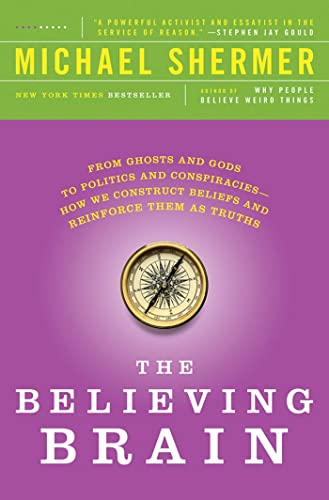
The Believing Brain
Summary of key ideas
Understanding the Believing Brain
In The Believing Brain, Michael Shermer delves into the human brain's predisposition to form beliefs. He begins by explaining that our brains are pattern-seeking machines, constantly trying to make sense of the world around us. This innate tendency leads us to form beliefs, which are essentially our brain's way of organizing and interpreting the information it receives.
Shermer argues that our beliefs are not formed based on evidence, but rather, we form our beliefs first and then seek out evidence to support them. This process, known as belief-dependent realism, means that our beliefs shape our perception of reality, rather than the other way around. He illustrates this concept with numerous examples from history, science, and everyday life.
The Role of Confirmation Bias
Confirmation bias, the tendency to seek out and interpret information in a way that confirms our pre-existing beliefs, plays a significant role in the formation and reinforcement of our beliefs. Shermer explains that our brains are wired to favor information that supports our beliefs, while dismissing or rationalizing away contradictory evidence. This bias, he argues, is a major obstacle to critical thinking and rational decision-making.
He further explores how confirmation bias influences our beliefs in various domains, including religion, politics, and pseudoscience. Shermer emphasizes that being aware of our cognitive biases is crucial for overcoming them and forming more accurate beliefs.
The Evolution of Belief Systems
Next, Shermer delves into the evolutionary origins of belief systems. He argues that our tendency to form beliefs and our susceptibility to cognitive biases have evolutionary advantages, such as promoting social cohesion and quick decision-making. However, these same traits can also lead to the formation of false or irrational beliefs.
He discusses how belief systems, including religious and ideological beliefs, have evolved and spread throughout human history. Shermer suggests that our brains' predisposition to form and maintain beliefs, combined with social and cultural influences, has led to the diversity of belief systems we observe today.
Challenging and Changing Beliefs
Despite our brain's strong inclination to maintain existing beliefs, Shermer argues that it is possible to challenge and change our beliefs through critical thinking and skepticism. He advocates for the scientific method as the most reliable tool for evaluating and revising our beliefs, as it is designed to minimize the influence of cognitive biases and provide an objective approach to understanding reality.
Throughout The Believing Brain, Shermer provides practical strategies for overcoming our cognitive biases and improving our critical thinking skills. He emphasizes the importance of being open-minded, seeking out diverse perspectives, and being willing to revise our beliefs in the face of new evidence.
Conclusion: The Power of the Believing Brain
In conclusion, The Believing Brain offers a thought-provoking exploration of the human brain's propensity to form and maintain beliefs. Shermer argues that understanding the cognitive processes behind belief formation is essential for navigating the complex and often contradictory world of information we encounter. By recognizing our cognitive biases and embracing a more skeptical and evidence-based approach to forming beliefs, we can strive to align our beliefs more closely with reality.
More knowledge in less time

Read or listen
Get the key ideas from nonfiction bestsellers in minutes, not hours.

Find your next read
Get book lists curated by experts and personalized recommendations.

Shortcasts
We've teamed up with podcast creators to bring you key insights from podcasts.
What is The Believing Brain about?
'The Believing Brain' by Michael Shermer delves into the neuroscience and psychology behind belief formation. Shermer explores how our brains are hardwired to seek patterns and create beliefs, often based on emotions and subjective experiences rather than evidence. Through in-depth research and engaging storytelling, the book challenges our assumptions and encourages critical thinking about the nature of belief.
The Believing Brain Review
The Believing Brain (2011) explores the fascinating realm of our belief systems and how they shape our understanding of the world. Here's why this book is worth reading:
- It presents a compelling analysis of how our brains construct beliefs, providing insights into why we hold onto certain ideas and how to critically examine them.
- With its well-researched examples and scientific explanations, the book offers a thought-provoking exploration of how beliefs can influence our perceptions and decisions.
- The book's engaging narrative and thought-provoking anecdotes keep readers captivated, making it a stimulating and intellectually rewarding read.
Who should read The Believing Brain?
- Readers who are curious about the psychology behind belief formation
- Individuals interested in critical thinking and skepticism
- Those who want to better understand their own cognitive biases
Categories with The Believing Brain
Book summaries like The Believing Brain
 Where Good Ideas Come FromSteven JohnsonThe Natural History of Innovation4.1
 God is not greatChristopher HitchensHow Religion Poisons Everything3.9
 A Brief History of Time Stephen HawkingFrom the Big Bang to Black Holes4.4
 The Selfish GeneRichard DawkinsA landmark work in the field of biology and evolution4.4
 AntifragileNassim Nicholas TalebThings That Gain from Disorder4.5
 Physics of the futureMichio KakuHow Science Will Shape Human Destiny and Our Daily Lives by the Year 21004.1
 MusicophiliaOliver SacksTales of Music and the Brain, Revised and Expanded Edition4.3
 How Music Works David ByrneHow circumstance and creativity collide in tune4.4
 The Sports GeneDavid EpsteinInside the Science of Extraordinary Athletic Performance4.3
 On intelligence Jeff Hawkins, Sandra BlakesleeHow a New Understanding of the Brain Will Lead to the Creation of Truly Intelligent Machines3.9
 Nutrition and Physical DegenerationWeston Andrew PriceA Comparison of Primitive and Modern Diets and their Effects4.2
 GutGiulia EndersThe Inside Story of Our Body’s Most Underrated Organ4.3
 Bad ScienceBen GoldacreA behind-the-scenes look at the bogus science used to mislead us every day.4.4
 Moonwalking with EinsteinJoshua FoerThe Art and Science of Remembering Everything4.2
 Do No Harm Henry MarshStories of Life, Death, and Brain Surgery4.2
People ❤️ Blinkist
Become a member of our community of 44 million people

96k ratings

73k ratings
Sven O.
It's highly addictive to get core insights on personally relevant topics without repetition or triviality. Added to that the apps ability to suggest kindred interests opens up a foundation of knowledge.
Guillem B.
Life changing. The concept of being able to grasp a book's main point in such a short time truly opens multiple opportunities to grow every area of your life at a faster rate.
Thi Viet Quynh N.
Great app. Good selection of book summaries you can read or listen to while commuting. Instead of scrolling through your social media news feed, this is a much better way to spend your spare time in my opinion.
People also liked these summaries
 Fluent ForeverGabriel WynerHow to Learn Any Language Fast and Never Forget It4.3
 Life at the Speed of Light J. Craig VenterFrom the Double Helix to the Dawn of Digital Life4.3
 The Language InstinctSteven PinkerHow the Mind Creates Language4.0
 A mind for numbersBarbara OakleyHow to Excel at Math and Science (Even If You Flunked Algebra)4.3
 The Structure of Scientific RevolutionsThomas S. KuhnA groundbreaking study in how science progresses4.3
 SmarterDan HurleyThe New Science of Building Brain Power3.6
 An Astronaut’s Guide to Life on EarthChris HadfieldWhat Going to Space Taught Me About Ingenuity, Determination, and Being Prepared for Anything3.9
 The Demon-Haunted WorldCarl SaganScience as a Candle in the Dark4.3
 Moore’s LawArnold Thackray, David Brock and Rachel JonesThe Life of Gordon Moore, Silicon Valley’s Quiet Revolutionary4.3
 Grain BrainDavid PerlmutterThe Surprising Truth about Wheat, Carbs, and Sugar4.3
 What If?Randall MunroeSerious Scientific Answers to Absurd Hypothetical Questions3.4
 On ImmunityEula BissAn Inoculation3.3
 Sonic BoomJoel Beckerman (Autor), Tyler GrayHow Sound Transforms the Way We Think, Feel, and Buy3.4
 Consider the ForkBee WilsonHow Technology Transforms the Way We Cook and Eat3.8
 Driven Paul Lawrence & Nitin NohriaHow Human Nature Shapes our Choices3.6
Trusted by the world's leading brands

Powerful ideas from top nonfiction
Try Blinkist to get the key ideas from 7,500+ bestselling nonfiction titles and podcasts. Listen or read in just 15 minutes.
Get started
Blink 3 of 8 - The 5 AM Club
by Robin Sharma
The Believing Brain FAQs
What is the main message of The Believing Brain?
The main message of The Believing Brain is how our brains are prone to finding patterns and creating beliefs.
How long does it take to read The Believing Brain?
The reading time for The Believing Brain varies, but it typically takes a few hours. The Blinkist summary can be read in just 15 minutes.
Is The Believing Brain a good book? Is it worth reading?
The Believing Brain is worth reading for its thought-provoking exploration of how our beliefs shape our reality.
Who is the author of The Believing Brain?
Michael Shermer is the author of The Believing Brain.