Better than a summary
Philosophy of Law summary
Raymond Wacks
No credit card required · Cancel anytime
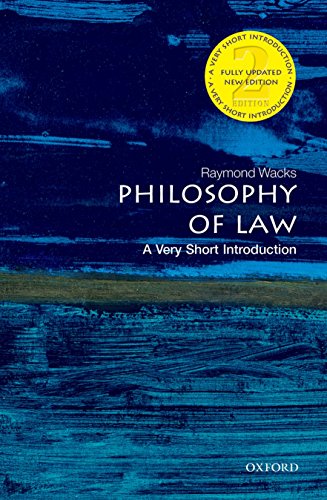
Philosophy of Law by Raymond Wacks provides a comprehensive exploration of the fundamental principles and theories that underpin the legal system. It delves into topics such as justice, rights, and the nature of law, offering valuable insights for both students and legal enthusiasts.
Topics
Philosophy of Law
Summary of key ideas
Understanding the Nature of Law
In Philosophy of Law, Raymond Wacks delves into the intricate world of jurisprudence, exploring the nature of law and its role in society. He starts by examining the fundamental question: what is law? He introduces us to various theories, including natural law theory, legal positivism, and legal realism, each offering a distinct perspective on the nature and function of law.
According to natural law theory, laws are derived from objective moral principles, and an unjust law is not a law at all. Legal positivism, on the other hand, argues that the validity of law is based on social facts, such as its enactment by a legitimate authority, irrespective of its moral content. Legal realism challenges these theories, asserting that judges often make decisions based on personal, political, and social factors, rather than rigid legal rules.
Law and Morality
Wacks then explores the relationship between law and morality, a subject that has long intrigued legal philosophers. He discusses the question of whether a law can be considered valid if it is morally unjust, and whether individuals have a moral obligation to obey the law. These debates, he explains, are central to understanding the nature of legal systems and their impact on society.
He also examines the concept of legal rights, distinguishing between moral rights and legal rights. While moral rights are based on ethical principles, legal rights are created and enforced by the legal system. Wacks highlights the complex interplay between these two types of rights, and the challenges that arise when they conflict.
Interpreting and Applying Law
Next, Wacks turns his attention to the interpretation and application of law. He discusses different theories of legal interpretation, such as textualism, intentionalism, and purposivism, each advocating for a distinct approach to understanding legal texts. He also explores the role of judges in interpreting and applying the law, emphasizing the significance of judicial discretion and the potential for differing interpretations.
Wacks then delves into the concept of legal reasoning, examining the methods used by judges to reach their decisions. He discusses the role of precedent, the use of analogical reasoning, and the importance of legal principles, illustrating how these elements contribute to the process of legal decision-making.
Law in a Global Context
In the latter part of Philosophy of Law, Wacks shifts his focus to the global dimension of law. He explores the concept of international law and its role in regulating relations between states, as well as the challenges associated with its enforcement. He also discusses the concept of human rights, examining the philosophical foundations of these rights and their significance in the modern world.
Wacks concludes by reflecting on the dynamic nature of law and its capacity for change. He emphasizes the importance of legal philosophy in understanding and critiquing the legal system, and in shaping the future development of the law. In doing so, he provides a comprehensive overview of the philosophy of law, shedding light on its complexities and its enduring relevance in our society.
More knowledge in less time

Read or listen
Get the key ideas from nonfiction bestsellers in minutes, not hours.

Find your next read
Get book lists curated by experts and personalized recommendations.

Shortcasts
We've teamed up with podcast creators to bring you key insights from podcasts.
What is Philosophy of Law about?
Philosophy of Law by Raymond Wacks delves into the fundamental questions surrounding the nature of law, its relationship with morality, and its role in society. Through thought-provoking analysis and real-world examples, the book challenges readers to critically examine their own beliefs about the legal system and its principles.
Philosophy of Law Review
- Explores the fundamental principles that underpin legal systems worldwide, providing a broad understanding of the philosophical basis of law.
- Examines real-life legal dilemmas and historic court cases, offering context and relevance to theoretical discussions, bridging theory and practice seamlessly.
- Raises thought-provoking questions about justice, rights, and the nature of law itself, ensuring a stimulating and intellectually enriching read.
Who should read Philosophy of Law?
Law students and legal professionals seeking a deeper understanding of the philosophical underpinnings of the legal system
Philosophy enthusiasts interested in exploring the ethical and moral dimensions of law
Individuals grappling with complex legal and ethical dilemmas in their personal or professional lives
Categories with Philosophy of Law
Book summaries like Philosophy of Law
 The Laws of SimplicityJohn MaedaDesign, Technology, Business, Life3.8
 On Being Peter AtkinsA Scientist's Exploration of the Great Questions of Existence3.3
 Do No Harm Henry MarshStories of Life, Death, and Brain Surgery4.2
 LeviathanThomas HobbesTeaser: Thomas Hobbes' classic4.5
 Doubt: A HistoryJennifer Michael HechtThe Great Doubters and Their Legacy of Innovation from Socrates and Jesus to Thomas Jefferson and Emily Dickinson3.6
 The Wisdom of InsecurityAlan WattsA Message for an Age of Anxiety4.4
 What Makes Us Human?Charles Pasternak, editorThe Reasons Why We are So Different4.0
 Zen Mind, Beginner’s MindShunryu SuzukiInformal Talks on Zen Meditation and Practice4.4
 The Daily StoicRyan Holiday, Stephen Hanselman366 Meditations on Wisdom, Perseverance, and the Art of Living 4.7
 At the Existentialist CaféSarah BakewellFreedom, Being and Apricot Cocktails 4.6
 Madness and CivilizationMichel FoucaultA History of Insanity in the Age of Reason4.4
 The Why CaféJohn P. StreleckyA Story About the Meaning of Life4.4
 Discipline & PunishMichel FoucaultThe Birth of the Prison4.3
 Great ThinkersThe School of Life, Alain de Botton (series editor)Simple Tools from Sixty Great Thinkers to Improve Your Life Today4.2
 The Origins of TotalitarianismHannah ArendtHannah Arendt's landmark work about Europe's anti-Semitic and imperialist roots4.6
People ❤️ Blinkist
Become a member of our community of 44 million people

96k ratings

73k ratings
Laura H.
When I saw Blinkist had produced an infographic style Blink for the Rich Dad, Poor Dad book, it was a good reminder of the concepts I loved.
Jonathan A.
Clearly communicates the value proposition of the most popular book summaries and offers a relatable, tangible template that I can use immediately.
Guillem B.
Life changing. The concept of being able to grasp a book's main point in such a short time truly opens multiple opportunities to grow every area of your life at a faster rate.
People also liked these summaries
 ConsciousAnnaka HarrisA Brief Guide to the Fundamental Mystery of the Mind4.3
 The Second MountainDavid BrooksThe Quest for a Moral Life4.4
 Stillness Is the KeyRyan HolidayTeaser: Timeless Stoic and Buddhist philosophy4.6
 A Brief History of ThoughtLuc FerryA Philosophical Guide to Living4.3
 To Have or To Be?Erich FrommTeaser: A classic about the psyche and socioeconomic change4.5
 Everything Is F*ckedMark MansonA Book About Hope4.3
 Doing PhilosophyTimothy WilliamsonFrom Common Curiosity to Logical Reasoning4.2
 The Art of LogicEugenia ChengHow to Make Sense in a World that Doesn't4.0
 Capitalism and FreedomMilton FriedmanTeaser: The definitive statement of Friedman's immensely influential economic philosophy4.3
 TruthHector MacdonaldHow the Many Sides to Every Story Shape Our Reality4.3
 On Having No HeadDouglas E. HardingZen and the Rediscovery of the Obvious3.8
 Status AnxietyAlain de BottonTeaser: How social isolation and meritocracy cause fear of underachievement and how to solve this4.5
 The Way of ZenAlan W. WattsTeaser: The history and core principles of the Eastern philosophy of Zen4.5
 Descartes’ ErrorAntonio DamasioEmotion, Reason and the Human Brain4.5
 A Biography of LonelinessFay Bound AlbertiThe History of an Emotion4.0
Trusted by the world's leading brands

Powerful ideas from top nonfiction
Try Blinkist to get the key ideas from 7,500+ bestselling nonfiction titles and podcasts. Listen or read in just 15 minutes.
Get started
Blink 3 of 8 - The 5 AM Club
by Robin Sharma