Better than a summary
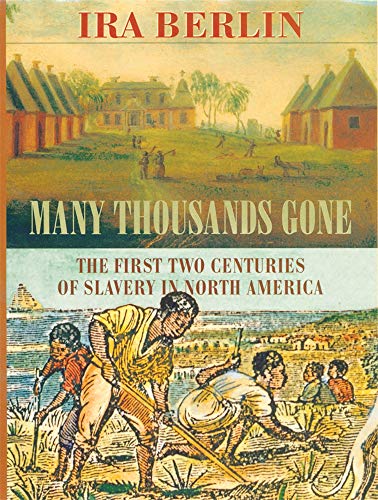
Many Thousands Gone summary
Ira Berlin
No credit card required · Cancel anytime
Many Thousands Gone by Ira Berlin is a comprehensive history of slavery in America. It delves into the lives of enslaved individuals, their cultures, and their struggles, providing a detailed and moving account of this dark period in American history.
Topics
Many Thousands Gone
Summary of key ideas
Understanding the Evolution of Slavery
In Many Thousands Gone by Ira Berlin, we are taken on a journey through the evolution of slavery in America. Berlin begins by highlighting the early years of slavery, where the institution was not yet fully formed. He describes how the first African slaves in the English colonies were treated more like indentured servants, often working alongside European laborers and even having the opportunity to gain their freedom after a set period of servitude.
As the book progresses, Berlin explains how the nature of slavery changed over time. The rise of the plantation system in the southern colonies, particularly after the introduction of rice and indigo cultivation, led to a shift in the treatment of African slaves. They were now seen as a permanent, hereditary labor force, and the harsh realities of chattel slavery began to take hold.
The Development of African-American Culture
One of the most fascinating aspects of Many Thousands Gone is Berlin's exploration of the development of African-American culture in the midst of slavery. He emphasizes that the African slaves who arrived in America were not a homogenous group, but rather a diverse collection of people from different regions, each with their own languages, customs, and traditions.
Despite the efforts of slave owners to strip them of their cultural identities, these diverse African groups managed to preserve and adapt their traditions, creating a new, distinctly African-American culture. Berlin highlights the ways in which these cultural adaptations were expressed in various aspects of life, including religion, music, and even resistance to slavery.
The Impact of the American Revolution
As we move into the late 18th century, Berlin examines the impact of the American Revolution on the institution of slavery. The rhetoric of liberty and equality that fueled the revolution prompted many African-Americans to question their own status as slaves. Some even fought for the British, who promised freedom to those who joined their cause.
However, the revolution did not bring about the end of slavery. Instead, it led to a reconfiguration of the institution, with the northern states gradually abolishing slavery while the southern states doubled down on it, leading to the entrenchment of slavery as a central feature of the American economy and society.
The Emergence of a Distinct African-American Identity
In the book's later chapters, Berlin delves into the early 19th century, a period marked by the rapid expansion of slavery in the southern states. He discusses the emergence of a distinct African-American identity during this time, shaped by the experiences of slavery and the shared struggle for freedom.
Despite the harsh conditions of their lives, African-Americans continued to resist their enslavement in various ways, from everyday acts of defiance to organized rebellions. Berlin emphasizes that these acts of resistance were not just reactions to the brutality of slavery, but also expressions of a collective desire for freedom and self-determination.
Final Thoughts on Many Thousands Gone
In conclusion, Many Thousands Gone offers a comprehensive and nuanced understanding of the history of slavery in America. Berlin's meticulous research and engaging narrative shed light on the complex and evolving nature of slavery, as well as the resilience and creativity of the African-American people in the face of unimaginable adversity.
By the end of the book, we come to understand that the legacy of slavery continues to shape American society and culture. Berlin's work serves as a powerful reminder of the enduring impact of this dark chapter in American history, and the ongoing struggle for racial equality and justice.
More knowledge in less time

Read or listen
Get the key ideas from nonfiction bestsellers in minutes, not hours.

Find your next read
Get book lists curated by experts and personalized recommendations.

Shortcasts
We've teamed up with podcast creators to bring you key insights from podcasts.
What is Many Thousands Gone about?
Many Thousands Gone by Ira Berlin explores the history of slavery in America from its beginnings in the 17th century to the early 19th century. Through extensive research and compelling storytelling, Berlin uncovers the diverse experiences of enslaved people and the complex social and economic factors that shaped their lives. This book offers a comprehensive and thought-provoking account of a dark chapter in American history.
Many Thousands Gone Review
Many Thousands Gone (1998) by Ira Berlin is a compelling exploration of the history of slavery in America. Here's why this book is worth reading:
- Offers a fresh perspective on the experience of enslaved African Americans, shedding light on their diverse cultural backgrounds and the social, economic, and political forces that shaped their lives.
- Examines the complexity of slavery in America, challenging simplistic narratives and presenting a nuanced understanding of the institution and its impact on individuals, communities, and the nation.
- Presents a rich and comprehensive account of the African American experience from slavery to freedom, providing valuable insights and raising important questions about race, identity, and equality.
Who should read Many Thousands Gone?
- Readers interested in the history of slavery in America
- Those who want to deepen their understanding of the experiences of enslaved people
- Individuals who seek a critical exploration of race and labor in early America
Categories with Many Thousands Gone
Book summaries like Many Thousands Gone
 I Am MalalaMalala YousafzaiThe Girl Who Stood Up for Education and Was Shot by the Taliban 4.5
 The MonopolistsMary PilonObsession, Fury and the Scandal Behind the World's Favorite Board Game4.0
 SapiensYuval Noah HarariA Brief History of Humankind4.3
 Doubt: A HistoryJennifer Michael HechtThe Great Doubters and Their Legacy of Innovation from Socrates and Jesus to Thomas Jefferson and Emily Dickinson3.6
 The Better Angels of Our Nature Steven PinkerWhy Violence has Declined4.5
 Bourbon EmpireReid MitenbulerThe Past and Future of America's Whiskey4.4
 Genghis Khan and the Making of the Modern WorldJack WeatherfordThe fascinating story behind the Mongol Empire4.3
 A People’s History of the United StatesHoward ZinnA brilliant and moving history of the American people3.9
 Women and PowerMary BeardA Manifesto4.1
 21 Lessons for the 21st CenturyYuval Noah HarariTeaser: Future proof yourself against the 21st Century4.4
 A History of GodKaren ArmstrongThe 4,000-Year Quest of Judaism, Christianity and Islam4.2
 CivilizationsMary BeardHow Do We Look / The Eye of Faith4.1
 The Spy and the TraitorBen MacintyreThe Greatest Espionage Story of the Cold War4.6
 The Origins of TotalitarianismHannah ArendtHannah Arendt's landmark work about Europe's anti-Semitic and imperialist roots4.6
 DreamlandSam QuinonesThe True Tale of America’s Opiate Epidemic4.5
People ❤️ Blinkist
Become a member of our community of 44 million people

96k ratings

73k ratings
Laura H.
When I saw Blinkist had produced an infographic style Blink for the Rich Dad, Poor Dad book, it was a good reminder of the concepts I loved.
Renee D.
I'm absolutely thrilled that Blinkist now offers infographics! I can't get enough of them—they're such a fun and effective way to grasp and remember key points.
Thi Viet Quynh N.
Great app. Good selection of book summaries you can read or listen to while commuting. Instead of scrolling through your social media news feed, this is a much better way to spend your spare time in my opinion.
People also liked these summaries
 The Happiness FantasyCarl CederströmTeaser: A history of happiness3.8
 Why The West Rules – For NowIan MorrisThe Patterns of History, and What They Reveal About the Future4.3
 The New Silk RoadsPeter FrankopanThe Present and Future of the World3.9
 The Golden ThreadKassia St ClairHow Fabric Changed History4.1
 The Square and the TowerNiall FergusonNetworks and Power, from the Freemasons to Facebook4.4
 IslamKaren ArmstrongA Short History4.2
 Revolutionary IranMichael AxworthyA History of the Islamic Republic4.0
 China in Ten WordsYu HuaTeaser: The ten key concePDs underlying China’s transformation4.1
 The Congo from Leopold to KabilaGeorges Nzongola-NtalajaA People's History4.3
 Written in HistorySimon Sebag MontefioreLetters that Changed the World3.8
 Crowds and PowerElias CanettiTeaser: A new way of looking at human history and psychology4.0
 PalestineNur MasalhaA Four Thousand Year History3.7
 India After GandhiRamachandra GuhaThe History of the World's Largest Democracy4.5
 The First ConspiracyBrad Meltzer, Josh MenschThe Secret Plot to Kill George Washington4.3
 ChernobylSerhii PlokhyThe History of a Nuclear Catastrophe4.6
Trusted by the world's leading brands

Powerful ideas from top nonfiction
Try Blinkist to get the key ideas from 7,500+ bestselling nonfiction titles and podcasts. Listen or read in just 15 minutes.
Get started
Blink 3 of 8 - The 5 AM Club
by Robin Sharma
Many Thousands Gone FAQs
What is the main message of Many Thousands Gone?
The main message of Many Thousands Gone is the complex history of African American slavery.
How long does it take to read Many Thousands Gone?
The reading time for Many Thousands Gone varies depending on the reader, but it typically takes several hours. The Blinkist summary can be read in just 15 minutes.
Is Many Thousands Gone a good book? Is it worth reading?
Many Thousands Gone is worth reading for its in-depth exploration of African American slavery and its impact on American history.
Who is the author of Many Thousands Gone?
The author of Many Thousands Gone is Ira Berlin.