Better than a summary
Are We Smart Enough to Know How Smart Animals Are? summary
No credit card required · Cancel anytime
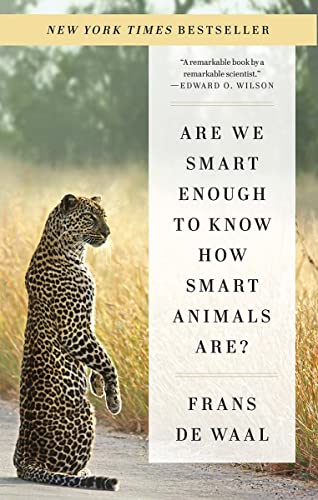
Are We Smart Enough to Know How Smart Animals Are? by Frans de Waal delves into the intelligence of various animal species and challenges our traditional views of human exceptionalism. It offers a thought-provoking exploration of animal cognition.
Table of Contents
- Are We Smart Enough to Know How Smart Animals Are?: summary of key ideas
- What is Are We Smart Enough to Know How Smart Animals Are? about?
- Are We Smart Enough to Know How Smart Animals Are? Review
- Who should read Are We Smart Enough to Know How Smart Animals Are??
- About the author
- Book summaries like Are We Smart Enough to Know How Smart Animals Are?
- People also liked these summaries
- Are We Smart Enough to Know How Smart Animals Are? FAQs
Are We Smart Enough to Know How Smart Animals Are?
Summary of key ideas
Understanding Animal Intelligence
In Are We Smart Enough to Know How Smart Animals Are? by Frans De Waal, we embark on a journey to understand the intelligence of animals. De Waal, a renowned primatologist, challenges the traditional view that humans are the only intelligent species. He argues that we have been underestimating the cognitive abilities of animals, and that we need to reassess our understanding of animal intelligence.
De Waal begins by discussing the concept of animal cognition, highlighting the various ways in which animals demonstrate intelligence. He presents examples of animals using tools, solving complex problems, and exhibiting social intelligence. He also emphasizes the importance of considering the evolutionary context of animal intelligence, suggesting that it is shaped by the specific ecological and social challenges each species faces.
Comparing Human and Animal Intelligence
Next, De Waal delves into the comparison between human and animal intelligence. He argues that while humans possess unique cognitive abilities, such as language and advanced symbolic thinking, animals exhibit their own forms of intelligence that are equally remarkable. For instance, he discusses the sophisticated communication systems of bees and the remarkable memory of elephants.
De Waal also challenges the notion that intelligence is a single, linear scale, with humans at the top. Instead, he suggests that intelligence is multifaceted, and different species excel in different cognitive domains. He introduces the concept of “animal cognition without human measures,” emphasizing the need to appreciate animal intelligence on its own terms.
Insights from Animal Studies
The book then takes us through a series of fascinating studies on animal cognition. De Waal shares insights from his own research on primates, highlighting their complex social structures and emotional lives. He also discusses studies on other animals, such as birds, dolphins, and octopuses, revealing their surprising cognitive abilities.
One particularly intriguing aspect of animal cognition that De Waal explores is the theory of mind – the ability to attribute mental states to oneself and others. He presents evidence suggesting that some animals, such as chimpanzees and dolphins, possess a rudimentary form of theory of mind, challenging the traditional view that this ability is unique to humans.
Implications for Animal Welfare
De Waal then turns his attention to the ethical implications of our understanding of animal intelligence. He argues that recognizing the cognitive complexity of animals has significant implications for their welfare. If we acknowledge that animals are sentient beings with rich cognitive and emotional lives, we have a moral obligation to treat them with respect and consideration.
He also discusses the implications of animal intelligence for conservation efforts, suggesting that a better understanding of animal cognition can help us develop more effective strategies for protecting endangered species and their habitats.
Reassessing Our Relationship with Animals
In conclusion, Are We Smart Enough to Know How Smart Animals Are? challenges us to reassess our relationship with animals. De Waal argues that our understanding of animal intelligence has been limited by anthropocentric biases, and that we need to adopt a more inclusive and respectful view of animal cognition. By doing so, we can not only gain a deeper appreciation for the diversity of life on Earth, but also take more ethical and effective actions to protect it.
More knowledge in less time

Read or listen
Get the key ideas from nonfiction bestsellers in minutes, not hours.

Find your next read
Get book lists curated by experts and personalized recommendations.

Shortcasts
We've teamed up with podcast creators to bring you key insights from podcasts.
What is Are We Smart Enough to Know How Smart Animals Are? about?
Are We Smart Enough to Know How Smart Animals Are? by Frans De Waal challenges our assumptions about animal intelligence. Through engaging stories and scientific research, the book explores the cognitive abilities of various species and raises thought-provoking questions about our relationship with the animal kingdom.
Are We Smart Enough to Know How Smart Animals Are? Review
Are We Smart Enough to Know How Smart Animals Are? (2016) by Frans De Waal explores the intelligence of animals and challenges our preconceived notions about their cognitive abilities. Here's why this book is worth reading:
- The book presents compelling evidence from scientific studies that reveal animals' complex problem-solving skills and emotional intelligence.
- Through captivating anecdotes and examples, it demonstrates how animals exhibit behaviors that were once thought to be exclusively human.
- De Waal's unique perspective and engaging writing style make this exploration of animal intelligence both fascinating and thought-provoking.
Who should read Are We Smart Enough to Know How Smart Animals Are??
- Curious individuals who are interested in understanding animal intelligence
- Animal lovers who want to deepen their appreciation for the cognitive abilities of different species
- Scientists and researchers looking to expand their knowledge of comparative cognition
Categories with Are We Smart Enough to Know How Smart Animals Are?
Book summaries like Are We Smart Enough to Know How Smart Animals Are?
 The Omnivore's DilemmaMichael PollanA Natural History of Four Meals4.4
 The GridGretchen BakkeThe Fraying Wires Between Americans and Our Energy Future4.2
 Alex & MeIrene PepperbergHow a Scientist and a Parrot Discovered a Hidden World of Animal Intelligence—and Formed a Deep Bond in the Process4.4
 The Rise and Fall of the DinosaursSteve BrusatteA New History of a Lost World4.6
 The Uninhabitable EarthDavid Wallace-WellsA Story of the Future4.5
 The MosquitoTimothy C. WinegardA Human History of Our Deadliest Predator4.7
 How Bad Are Bananas?Mike Berners-LeeThe Carbon Footprint of Everything4.2
 We Are the WeatherJonathan Safran FoerSaving the Planet Begins at Breakfast4.3
 The Biological MindAlan JasanoffHow Brain, Body, and Environment Collaborate to Make Us Who We Are4.4
 DrawdownPaul Hawken (Editor)The Most Comprehensive Plan Ever Proposed to Reverse Global Warming4.3
 ChernobylSerhii PlokhyThe History of a Nuclear Catastrophe4.6
 UnderbugLisa MargonelliAn Obsessive Tale of Termites and Technology4.6
 Adventures in the AnthropoceneGaia VinceA Journey to the Heart of the Planet We Made4.2
 FalterBill McKibbenHas the Human Game Begun to Play Itself Out?4.2
 NovaceneJames LovelockThe Coming Age of Hyperintelligence4.3
People ❤️ Blinkist
Become a member of our community of 44 million people

96k ratings

73k ratings
Laura H.
When I saw Blinkist had produced an infographic style Blink for the Rich Dad, Poor Dad book, it was a good reminder of the concepts I loved.
Jonathan A.
Clearly communicates the value proposition of the most popular book summaries and offers a relatable, tangible template that I can use immediately.
Thi Viet Quynh N.
Great app. Good selection of book summaries you can read or listen to while commuting. Instead of scrolling through your social media news feed, this is a much better way to spend your spare time in my opinion.
People also liked these summaries
 Foragers, Farmers, and Fossil FuelsIan MorrisHow Human Values Evolve 4.0
 Food FixMark Hyman, MDHow to Save Our Health, Our Economy, Our Communities, and Our Planet – One Bite at a Time4.5
 The Incredible Journey of PlantsStefano MancusoTeaser: A fascinating account of natural history4.5
 Entangled LifeMerlin SheldrakeHow Fungi Make Our Worlds, Change our Minds and Shape Our Futures4.7
 Losing EdenLucy JonesWhy Our Minds Need the Wild4.5
 Isaac's StormErik LarsonA Man, a Time, and the Deadliest Hurricane in History4.3
 The Book of HumansAdam RutherfordA Brief History of Culture, Sex, War and the Evolution of Us4.3
 Losing EarthNathaniel RichA Recent History4.4
 The Next Great MigrationSonia ShahThe Beauty and Terror of Life on the Move4.2
 The Fate of RomeKyle HarperClimate, Disease, and the End of an Empire4.4
 The Fate of FoodAmanda LittleWhat We'll Eat in a Bigger, Hotter, Smarter World4.1
 Honeybee DemocracyThomas D. SeeleyA fascinating story of collective wisdom and effective decision-making4.5
 The Future We ChooseChristiana Figueres, Tom Rivett-CarnacSurviving the Climate Crisis4.1
 The Book of EelsPatrik SvenssonOur Enduring Fascination with the Most Mysterious Creature in the Natural World4.6
 The Eight Master Lessons of NatureGary FergusonWhat Nature Teaches Us About Living Well in the World4.4
Trusted by the world's leading brands

Powerful ideas from top nonfiction
Try Blinkist to get the key ideas from 7,500+ bestselling nonfiction titles and podcasts. Listen or read in just 15 minutes.
Get started
Blink 3 of 8 - The 5 AM Club
by Robin Sharma
Are We Smart Enough to Know How Smart Animals Are? FAQs
What is the main message of Are We Smart Enough to Know How Smart Animals Are??
The main message of Are We Smart Enough to Know How Smart Animals Are? is that animals possess unique cognitive abilities and deserve our respect and understanding.
How long does it take to read Are We Smart Enough to Know How Smart Animals Are??
The reading time for Are We Smart Enough to Know How Smart Animals Are? varies depending on the reader's speed. However, the Blinkist summary can be read in just 15 minutes.
Is Are We Smart Enough to Know How Smart Animals Are? a good book? Is it worth reading?
Are We Smart Enough to Know How Smart Animals Are? is a thought-provoking read, shedding light on the complexity of animal intelligence and challenging our assumptions. It's definitely worth reading!
Who is the author of Are We Smart Enough to Know How Smart Animals Are??
The author of Are We Smart Enough to Know How Smart Animals Are? is Frans De Waal.